























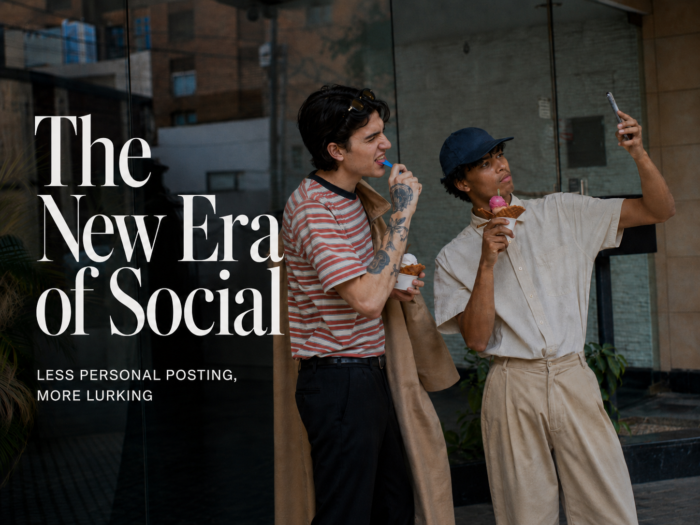
There was a stretch of the internet, back before the algorithm and the AI slop took over, when people actually used social media to be… social. Holiday photo dumps, personal life musings, the odd overshare at 1am. If you’ve noticed your social circle showing up less in your algorithm of late, that’s no coincidence (and the data backs it up).
New research from Incogni found people are posting less on social media than they were five years ago. Two threads seem to explain most of it. One is privacy: more people are locking down who can see what they share. The other is burnout: more than half of those surveyed said just maintaining a social presence “feels like work.” Read: it’s just no fun anymore.
The lazy read on that stat is “organic’s dead, everyone’s checked out.” It isn’t. What’s actually happening is more specific than that: personal posting is moving into DMs and close friend groups, where it arguably always belonged, while the public feed is being used more and more purely for entertainment. Reels already account for the majority of time people spend on Instagram, and the algorithm keeps leaning further into that every quarter.
Why this is good news for brands
There used to be a real “ick” to brands showing up mid-scroll, interrupting someone’s holiday snaps or a friend’s life update. As personal content thins out, so does that ick. What’s left in its place isn’t tolerance for brands, it’s expectation. People are on these platforms to be entertained, and they’ve largely stopped drawing a hard line between entertainment and branded content, provided the content is actually good.
That’s the opportunity. Here’s the catch that comes with it.
The catch
If the feed is entertainment rather than updates from mates, the competitive set for a brand’s content isn’t its category rivals anymore. It’s every creator that audience has chosen to follow. People who’ve spent years learning exactly how to hold a stranger’s attention for the first nine seconds of a video, refining hooks, pacing, and tone the way a TV writer refines a cold open.
Most marketing teams simply aren’t built for that fight. A caption knocked out in five minutes and a stock-footage edit doesn’t hold up against that level of platform fluency, no matter how well-intentioned the post is.
So what does actually competing look like? Three things, in our experience.
1. Stop optimising for the scroll-past
A lot of brand content is still built to survive a skim: logo visible early, message clear, nothing too risky. Creators build for the opposite outcome. They build for a stop, a hook sharp enough that someone’s thumb pauses on purpose. That has to be baked into the idea at the concept stage, not something an editor tries to bolt on after the footage is already shot. If the first three seconds don’t earn the next three, the rest of the video doesn’t matter.
2. Out with marketing, in with writers’ rooms
The brand channels performing best right now increasingly borrow from TV writers’ rooms and creator teams, not traditional ad agency structures. The skillset that builds a series worth subscribing to is different from the skillset that produces a single polished ad. It’s less about one hero piece landing perfectly, and more about a run of episodes that train an audience to come back. That shift in thinking, from campaign to series, changes how a brief gets written long before a camera rolls.
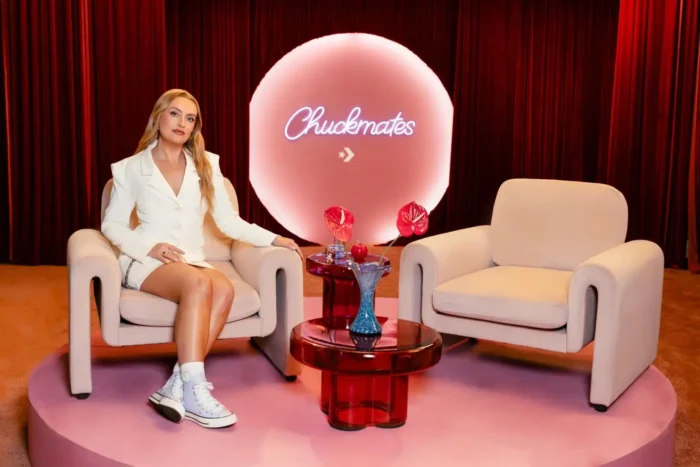
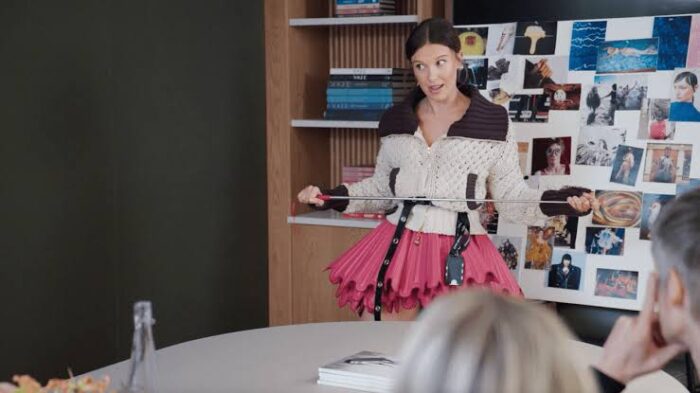
A few brands have already proven the model out. Last year, Converse teamed up with Chicken Shop Date host Amelia Dimoldenberg for Chuckmates, a blind dating show where contestants pick a match based on nothing but their choice of Chuck Taylors. It plays like a proper dating show first, an ad for sneakers a distant second. Around the same time, British Vogue took a similar approach with Millie Bobby Brown, casting her as a hapless intern for a day rather than the cover star, in a format that works because it’s funny and a little chaotic, not because it’s polished. Neither read as a campaign. Both were built to be watched for their own sake, brand along for the ride rather than front and centre.
3. Cultural context beats posting more
Volume without context is just noise with a budget behind it. The brands that cut through aren’t the ones jumping on every trend the moment it appears, they’re the ones that know exactly where their brand genuinely lives in culture, and only show up in the conversations where they can add something real, rather than inserting themselves for the sake of visibility. That kind of restraint is harder than it sounds, and it’s usually the difference between content that feels native to a platform and content that feels like an ad wearing a trend as a costume.
The opportunity
The audience is still lurking. Only now they’re paying more attention to video than ever before, and they’ve gotten a lot better at tuning out the stuff that isn’t worth their time. Be more intentional with your channels, before clogging up the feed with more mindless volume, think about how people choose to watch and build for it.
If you’re thinking about what that looks like for your brand, that’s a conversation we’d love to have. Hit us up via the chat button on the lower right or email us at info@weknowvideo.com.au
By Katie Martlew
Senior Content Strategist, We Know Video