

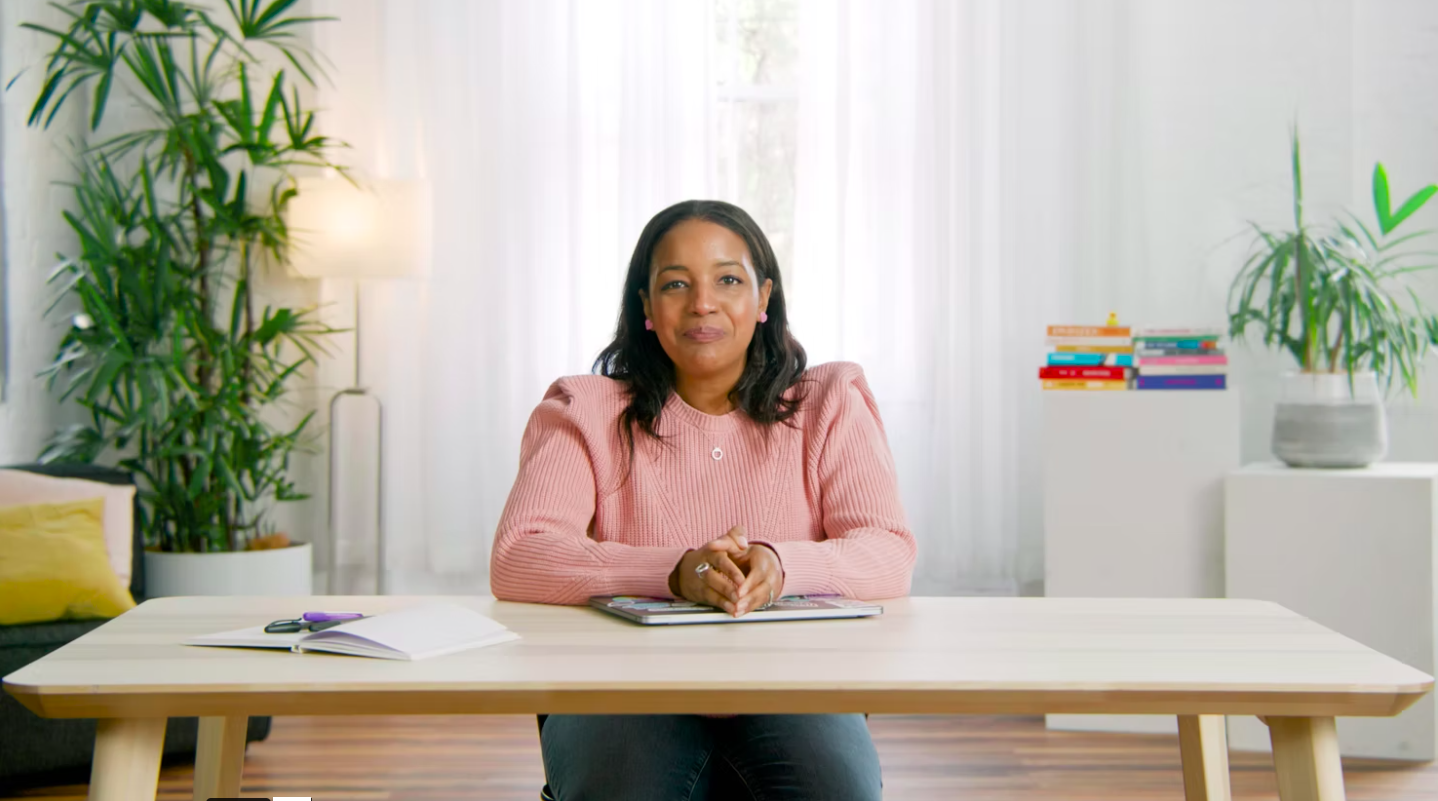














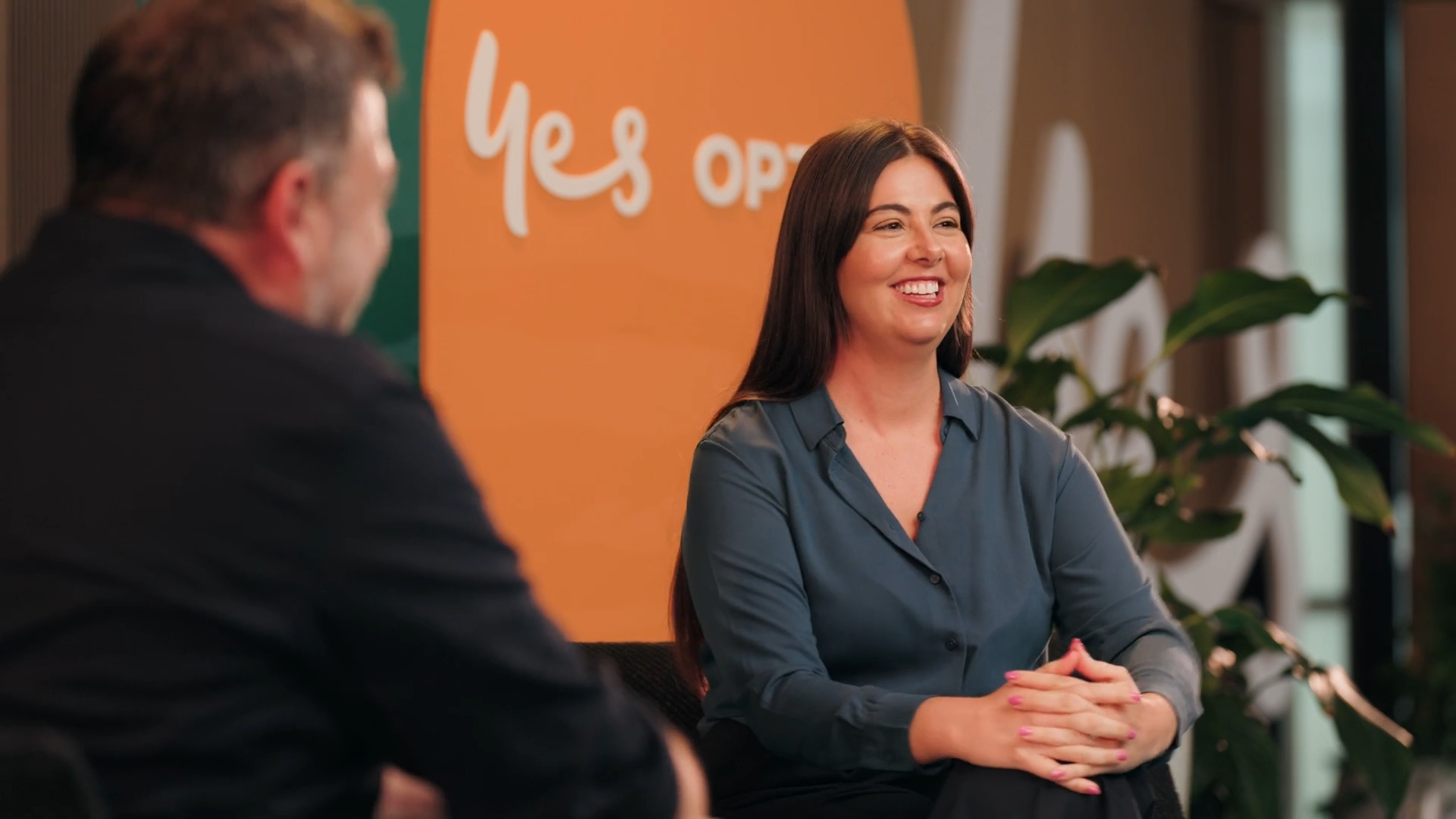

A testimonial video can be the lever that moves a prospect into a customer if it’s used as a high-quality sales tool. Testimonial videos work because they add credibility and proof to your business or product in a voice that isn’t yours. Positioned at the right point of the sales process, it can move a hesitant prospect forward.
This article covers what makes testimonial video commercially effective, how the production process works, where it fits in the sales cycle, and how to avoid the most common reason these videos underperform.

What’s covered?
- Why Does Testimonial Video Convert More Than Almost Any Other Content Format?
- Where Does Testimonial Video Move Deals Forward?
- What Makes a Testimonial Video Commercially Effective?
- How Does We Know Video Approach Testimonial Video Production?
- How Has This Worked in Practice?
- What Does Testimonial Video Cost, and What Drives the Investment?
- Testimonial Video vs Written Case Studies and Star Ratings: Which Should You Use?
- Where Should Testimonial Video Live Once It’s Made?
- How Do You Measure Whether a Testimonial Video Is Working?
- Before You Commission Your Next Testimonial Video
- Frequently Asked Questions
Why Does Testimonial Video Convert More Than Almost Any Other Content Format?
A written testimonial tells a prospect someone was satisfied. A testimonial video shows prospects why, letting them judge for themselves whether that reason applies to their own situation.
Most buyers, especially those working in B2B industries, don’t need proof of product. They want evidence your product will work for someone like them, facing a problem like theirs. A well-built testimonial video acts as evidence in the voice of a peer rather than a vendor.
This works for three reasons:
- It’s third-party proof, not self-description. A claim from an existing customer holds weight and adds credibility.
- It answers an objection. A well-briefed customer describes the same hesitation the prospect feels at that current moment, and explains what changed their mind.
- It travels. A testimonial video can sit on a landing page, get sent by a salesperson mid-negotiation, or run as a paid cutdown, all from the same shoot.
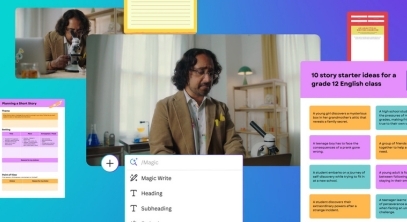
We Know Video’s testimonial video for Dovetail, the research platform, focused on Breville’s use of the tool. One hero video was paired with a series of short cutdowns for social, each built around a different theme or insight from the shoot. In doing so, following the model outlined above.
The most successful testimonial videos work because it was built around a defined commercial job. Rather than a video that gets made without direction.
Where Does Testimonial Video Move Deals Forward?
Most testimonial videos underperform because businesses position them generically. They’re usually used as evidence that a business is good at what it does, rather than aiming it at a named point of resistance in the buying journey.
Deals stall for several reasons; some of the most common include:
- A stakeholder outside the initial conversation (finance, IT, procurement) sees the proposal for the first time and raises concerns
- The buyer understands the offer but isn’t confident they can defend the decision internally
- The pitch describes value in general terms and never translates it into an outcome the buyer’s business cares about
A testimonial video aimed at one of these moments of friction can be powerful, especially if a customer who had the same concern is featured and can speak to how it played out.
What Makes a Testimonial Video Commercially Effective?
Production quality matters, but the strategy behind it is equally as important.
A Story Built Around a Real Business Problem
The strongest testimonial videos follow the shape of a decision: what was happening before, what changed, and what that meant for the business. You should aim to give prospects something to measure their own situation against.
A Customer Who Can Speak to Outcomes, Not Just Satisfaction
A generic, blanket statement like “they were great to work with” doesn’t give your prospect anything to work with. Instead, a customer who names a concrete change, like time saved or a process that works after being broken for a long time, gives the viewer a reason. Part of the production job is pulling that information out in the interview.
Production That Doesn’t Feel Like a Performance
Commonly, a customer freezes the moment a camera is pointed at them – we’ve all been there. To avoid this, make sure to provide a thorough briefing beforehand, consider a conversational interview style rather than scripted lines, and a relaxed setting can help make the process easier. It will also result in your testimonial video looking more relaxed and less like an advert.

How Does We Know Video Approach Testimonial Video Production?
At We Know Video, strategy always comes before the camera. WKV produces corporate testimonial videos for clients across Sydney and Melbourne. The same process applies whether the shoot takes place at head office or on a warehouse floor. Here’s what you can expect:
Strategy and Objective Setting
Before scheduling anything, WKV works with the client to establish where this video needs to work: removing a named objection late in the sales cycle, supporting a broader brand credibility push, or both. That decision determines which customer to feature, what the interview needs to draw out, and what formats the deliverables need to take.
Sourcing and Briefing the Right Customer
Not every satisfied customer makes a good subject. The right one has a clear story, speaks candidly, and ideally resembles the prospect the business most wants to convert. WKV briefs the customer ahead of the shoot, in person or by call, to understand their story and put them at ease, without scripting their answers, so what’s captured on the day still sounds like them.
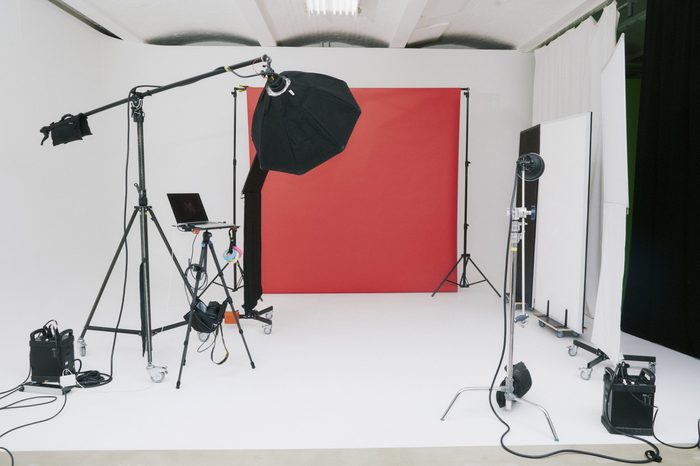
Production Day
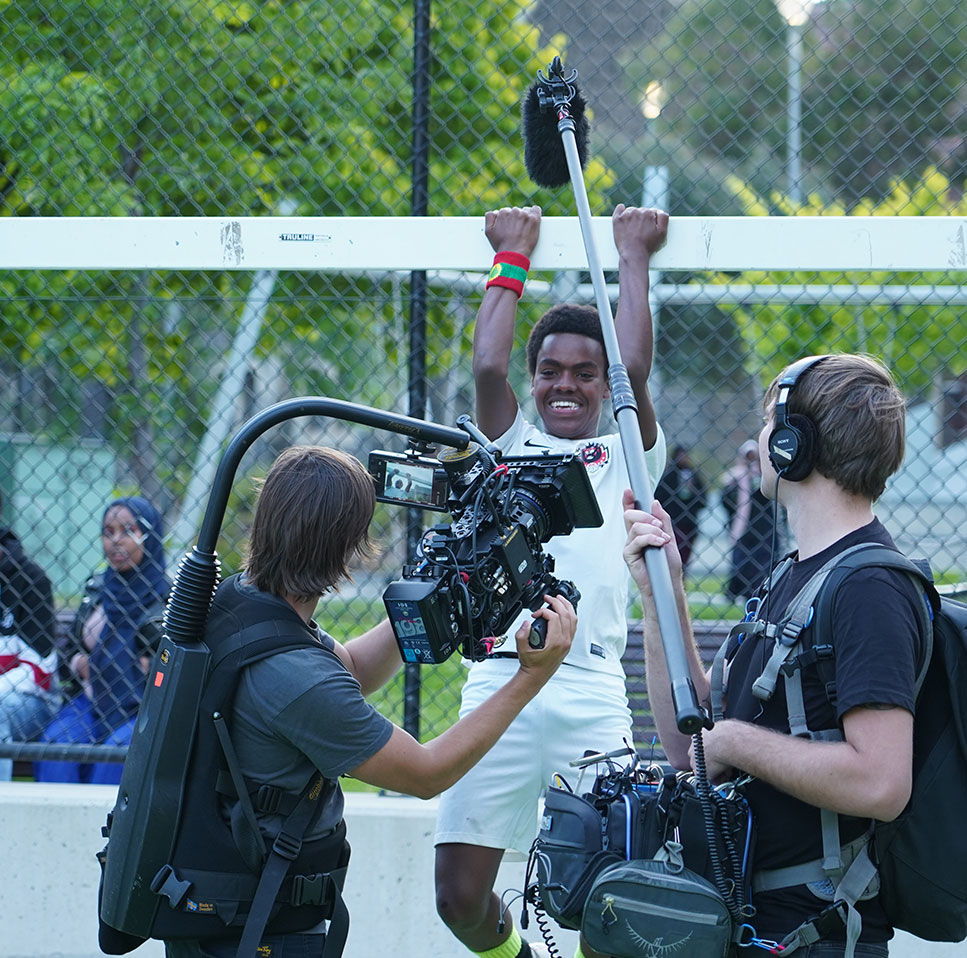
Interviews run conversationally rather than as a Q&A read from cue cards. This is because the best material tends to surface once someone feels comfortable enough to speak naturally. Alongside the interview, the crew captures supporting footage of the customer’s business, product in use, or team environment, giving editors the material to build a story rather than a single static talking head.
Post-Production and Distribution-Ready Cuts
A single shoot should work across multiple placements. WKV structures the edit around a clear narrative arc, then produces the format variations a modern distribution plan needs. This can be anything from a full-length version for sales use and landing pages to shorter cuts for social and paid placement, with aspect ratios suited to each platform.
How Has This Worked in Practice?
WKV’s ongoing partnership with Canva includes customer testimonial video as part of a broader, always-on content programme supporting the company’s enterprise feature set. Testimonial content sits alongside a branded content series and product launch video as part of a consistent, scalable production model, rather than a single shoot commissioned in isolation. The testimonial work isn’t the headline asset in the partnership; it’s one part of a content system built to run continuously, which is a different commercial problem to solve than a single standalone testimonial.
For Shippit, the brief was narrower and more pointed. WKV produced a customer testimonial video designed specifically as a sales enablement and thought leadership tool, aimed at scaling customers evaluating Shippit against the shipping, fulfilment and post-purchase problems they were already facing. There was no ambiguity about the job: give Shippit’s sales team something to put in front of prospects wrestling with a problem the featured customer had already solved.
What Does Testimonial Video Cost, and What Drives the Investment?
Rather than quote a figure that won’t reflect your brief, it’s more useful to understand what drives the cost of a testimonial video project.
- Scope of the customer story. A single customer, single-location shoot costs less than a multi-customer campaign covering several use cases or industries.
- Production complexity. The number of camera setups, whether the edit needs motion graphics or animated data points, and how much supporting footage the shoot requires all affect the post-production workload.
- Deliverable count. A full-length version alone costs less than a full-length version plus a set of platform-specific cutdowns and aspect ratio variations.
- Ongoing versus one-off. Businesses producing testimonial video as a recurring programme typically get more efficient value per asset, because pre-production learnings and production relationships carry across projects.
Instead of asking, “what does a testimonial video cost,” you should ask “what does it need to achieve, and does the scope match that?” A video meant to remove one objection for a sales team needs a very different scope to one meant to anchor a homepage or brand campaign.

Testimonial Video vs Written Case Studies and Star Ratings: Which Should You Use?
These formats don’t compete for the same job, and businesses that get the most value tend to use more than one. A testimonial video functions as a video case study: the same challenge-solution-result structure as a written one, told by the customer rather than described by the business.
A written case study works as a reference document. Prospects read it once they’re deep in evaluation, comparing vendors and looking for detail: methodology, numbers, implementation specifics. It rewards patience and works well further down the funnel.
A star rating or short quote works as a trust signal, not a story. It reassures a browsing prospect that others had a good experience, but doesn’t explain why, and carries limited weight for a considered B2B purchase.
A testimonial video, or video case study, sits earlier in the process and does a different job. It captures attention, builds emotional credibility, and gives a prospect a reason to keep engaging before they’re ready to read a lengthy document. It works well on a homepage, in a sales conversation, or in a paid campaign, precisely because it doesn’t require the viewer to already be committed to evaluating you.
Most businesses don’t need to choose. A testimonial video that captures the story, paired with a written case study that backs it up with detail, covers both the top and bottom of the funnel from the same customer relationship.
Where Should Testimonial Video Live Once It’s Made?
A testimonial video that only lives on a portfolio page is a wasted production. Businesses that see genuine commercial return integrate it directly into how they sell and market:
- Website. Homepage, relevant service or solution pages, and a dedicated case study or proof page
- Sales process. Shared directly by sales teams at the point where a named objection or hesitation appears
- Email and nurture sequences. Placed where a prospect is already close to a decision and needs a final reason to act
- Paid and organic social. Full-length on platforms built for longer viewing, cutdowns on platforms built for speed
- Pitch decks and proposals. Embedded or linked as supporting evidence at the exact point a claim appears
Distribution needs planning before the shoot, not working out afterwards. Where a video needs to live determines its length, pacing and format, which is why distribution belongs in the strategy phase, not the delivery email.
How Do You Measure Whether a Testimonial Video Is Working?
View counts tell you whether people watched, but the more useful indicators sit closer to revenue:
- Whether sales teams use it, unprompted, in live deals
- Whether the objection it was built to address comes up less often, or resolves faster, once prospects have seen it
- Whether deal velocity improves at the stage where the video is typically shared
- Whether the video shows measurable engagement in the channel it was placed in (landing page, email sequence, paid campaign) relative to other assets in that channel
A testimonial video built around a defined commercial objective is straightforward to measure against that objective. A generic brand asset is much harder to tie to any outcome at all, usually a sign the strategy step got skipped.

Before You Commission Your Next Testimonial Video
The question worth asking isn’t whether your business has a good customer story. Most do. The real question is whether that story is currently doing any work, or sitting unused in an inbox, a Slack message, or a salesperson’s memory.
Testimonial video is valuable because, built properly, it answers the exact hesitation a prospect feels as they feel it. That takes the same strategic groundwork as any other piece of revenue-focused content: knowing who the video needs to convince, what’s stopping them, and where the finished asset needs to live to reach them.
WKV works with corporate and enterprise clients across Sydney and Melbourne to build testimonial videos around those specifics, from the initial strategy conversation through to distribution-ready deliverables. If your business has a customer story currently going to waste, let’s talk about what a testimonial video built around it could do. Click the chat button or get in touch via email: info@weknowvideo.com.au
For a detailed guide on video production prices in general, from social video to corporate video, TVCs and beyond, check out our latest article here: How much does video production cost
Frequently Asked Questions
What’s the Difference Between a Testimonial Video and a Case Study Video?
The terms are often used interchangeably, and in practice there’s significant overlap. A testimonial video typically centres on the customer’s direct account of their experience, in their own words. A case study video sometimes adds more explanatory or data-led context around that account. Either way, the value comes from a real customer describing a real result, structured around a clear before-and-after.
How Long Should a Testimonial Video Be?
A full-length version typically runs two to four minutes, long enough to establish the problem, the shift, and the outcome without losing the viewer’s attention. Cutdowns of 15 to 60 seconds usually come from the same interview for social and paid placements, where attention spans run tighter.
How Do We Choose Which Customer to Feature?
Look for a customer with a clear story rather than simply the most enthusiastic one. The strongest subjects can speak to a genuine before-and-after, stay candid on camera, and ideally resemble the type of prospect the business most wants to convert. A recognisable brand name helps, but isn’t a requirement.
What if Our Customer Is Nervous About Being on Camera?
This is common and manageable. Thorough briefing beforehand, a conversational interview approach rather than scripted questions, and a relaxed set all help. Most people who speak comfortably in normal conversation can deliver the same quality on camera once the format stops feeling like a performance.
Can Testimonial Video Work for a Long, Multi-Stakeholder B2B Sales Cycle?
Yes, and a B2B testimonial video often works hardest there. Long sales cycles involve multiple decision-makers, each with different concerns. A testimonial aimed at a named stakeholder objection, rather than a generic brand message, gives sales teams something concrete to share at exactly the point resistance appears.
Should the Customer Read From a Script?
No. Scripted answers are usually easy to spot and undermine the credibility the format depends on. The stronger approach develops talking points and a clear narrative structure in advance, then runs the actual interview as a genuine conversation.
How Many Testimonial Videos Does a Business Need?
That depends on how many distinct objections or use cases the business needs to address. A business selling into several industries, or facing multiple recurring objections, usually gets more value from a small library of testimonials, each aimed at a specific scenario, than from a single generic version meant to cover everything.
Should We Film at the Customer’s Premises or in a Studio?
Filming at the customer’s workplace is usually preferable. It adds authenticity, gives the edit natural supporting footage of the business in action, and tends to put the customer more at ease than an unfamiliar studio setting.
Does a Testimonial Video Work Equally Well in Paid and Organic Placements?
Not automatically. Organic placements (a website, a shared link, an email) can carry a longer, more detailed cut because the viewer already chose to engage. Paid placements need the strongest proof point in the first few seconds, since attention isn’t guaranteed. The same interview can usually supply both, but the edit needs building for each context rather than reusing as-is.
How Do We Know if a Testimonial Video Is Influencing Revenue?
Track it against the objection or decision point it was built to address: whether sales teams use it in live deals, whether that hesitation comes up less often once prospects have seen it, and whether deal progression improves at the stage where it’s typically shared. View counts alone won’t answer this.
Do We Need the Customer’s Sign-Off Before Publishing?
Yes. Get written consent covering usage rights and, where relevant, review of the final cut before the shoot, not after. This protects both businesses and avoids delays late in the process when the video is otherwise ready to go live.