














In 2026, most video production has AI involved somewhere, whether that’s in the creation process or in the video itself. In most cases, businesses are adopting it faster than audiences are learning to trust it, and that gap is the thing worth understanding before briefing AI-assisted production. In this article, we cover what the current AI video production statistics show, where AI earns its place in a professional workflow, and where it still costs a brand more than it saves.

Quick answer: AI in video production is now standard practice. Wyzowl’s 2026 State of Video Marketing report found 91% of businesses use video marketing, with 82% reporting a positive return, and 63% of marketers have used or currently use AI tools to help create content. Grand View Research values the AI video generator market at USD 946.4 million in 2026. Trust hasn’t kept the same pace, and this gap matters more than adoption when it comes to briefing AI-assisted production.
What’s Covered?
- What Do AI Video Production Stats Show?
- What Do the Numbers Say About AI Video Production in Australia?
- Where Does AI Earn Its Place in a Video Production Workflow?
- Where Does Trust Fit Into AI Video Production?
- What Does This Mean If You’re Briefing Video in 2026?
- Which Parts of the Process Should AI Touch?
- Frequently Asked Questions
What Do AI Video Production Stats Show?
These data points show how fast the market is growing, how broadly businesses have adopted AI tools, and how far trust has kept up. Here’s what the current research says on each.
The Market is Compounding Close to 20% a Year
Fortune Business Insights puts the AI video generator market at USD 847 million in 2026, growing to USD 3.35 billion by 2034 at an 18.8% CAGR. Grand View Research’s figures track closely: USD 946.4 million in 2026, reaching USD 3.44 billion by 2033.
Adoption is broad, not niche
2026 data from HubSpot found nearly 75% of marketers use AI for media creation, 44% specifically for video or animation generation, and 42% for AI editing tools.
Advertisers moved first, and cost now drives the decision
The IAB found 86% of video ad buyers were already using or planning to use generative AI for video creative. A follow-up IAB study found cost efficiency has overtaken creative novelty as the top-cited reason why.
Real people still win
78% of consumers trust video featuring real people more than AI-generated content, a gap that hasn’t closed as generation tools have improved.
What Do the Numbers Say About AI Video Production in Australia?
Australian video investment is strong. IAB Australia’s 2026 Video Advertising State of the Nation Report found the market reached $5.4 billion in 2025, up 19.8% year on year, and now accounts for 29% of total online advertising investment. Confidence in AI specifically is lower: the same survey of 78 Australian agency decision-makers found that 41% cite AI’s impact among their leading industry concerns, on par with cross-channel measurement and second only to broader economic conditions. This shows Australian buyers are backing video with budgets. AI adoption is slower and more deliberate.
Where Does AI Earn Its Place in a Video Production Workflow?
The value of AI depends on which stage of production it’s touching. Most briefs go wrong by thinking and treating it as one capability, rather than a set of tools suited to specific tasks.
| Production Stage | AI’s Role | Human’s Role |
|---|---|---|
| Scripting and concepting | Drafts, structure, rapid iteration | Deciding the argument, tone, and audience fit |
| Filming and talent | Synthetic generation | Real people, real direction, real performance |
| Editing and post | Transcription, rough cuts, captioning, first-pass colour | Final narrative judgement, pacing, the edit that lands |
| Localisation and variants | Multi-language versions, aspect-ratio cutdowns | Reviewing for brand and cultural accuracy |
| Distribution assets | Platform-specific versions from an approved master | Approving what actually ships |
Filming and talent are the rows to watch. AI can generate synthetic presenters and footage, but this is also where the trust data below applies most directly, and it’s rarely the right call for anything meant to build credibility with a buyer. This is where a lot of brands tend to get it wrong.
Where Does Trust Fit Into AI Video Production?
Trust matters most commercially. Animoto’s 2026 State of Video Report found 83% of consumers say they’ve watched a video they suspected was AI-generated, most often spotting it through robotic gestures, unnatural voices, or a flat emotional tone, and 36% say it lowers their opinion of the brand behind it. Those giveaways sit exactly where B2B and testimonial content need to feel most credible. A prospective client or buyer probably isn’t interested in grading the cinematography of the piece. They’re making a decision based on whether they believe in your brand, and a real person on screen can help build credibility.
This is why testimonial video is a format We Know Video keeps largely AI-free beyond the editing process. A testimonial’s job is transferring trust from a real customer to a prospective one. This doesn’t usually survive a synthetic voice or a generated presenter, no matter how convincing the output sounds in isolation.
It’s important to note that none of this argues against AI in production. Instead, you should be precise about where AI sits. Advertisers using AI for scaled, low-stakes ad variants are seeing real efficiency gains. Whereas brands that use it for testimonials or executive messaging are likely to run into the trust penalty this data describes.
What Does This Mean If You’re Briefing Video in 2026?
The risk with using AI for video production is using it where audiences notice and penalise it, while missing where it would free up budget for work that needs a person behind it. This is the logic behind our own AI-enabled production work, where AI supports the process without replacing the judgement calls that make a video work commercially.
For Humanforce, a workforce management platform used by frontline and shift-based organisations across Australia, We Know Video built a generative AI explainer almost entirely from AI-generated assets. The team used custom ComfyUI workflows to create consistent 3D characters and environments that blend with UI graphics and motion design. The result isn’t a stock animation nor a product demo. It’s a distinctive visual language built to solve the actual problem with generative content: not generation itself, but the consistency, controllability, and commercial polish a brand campaign demands.
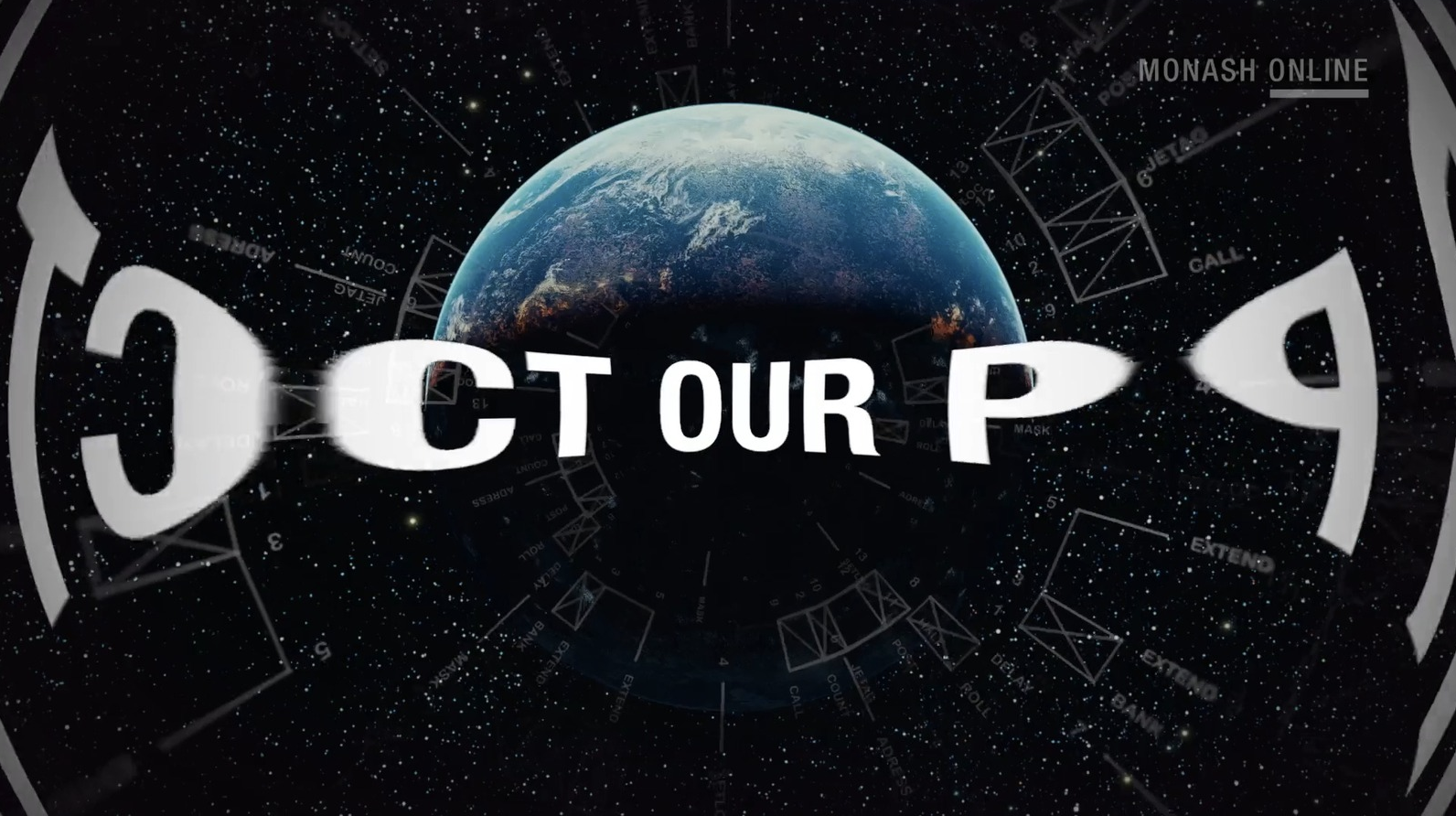
For Monash Online, We Know Video produced The Click Effect. This is twelve video assets across YouTube and Meta built from stock footage and generative AI, engineered to look and feel like a filmed production without the cost of a shoot. The brief called for volume, authenticity, and delivery within limited production resources, three things that don’t usually coexist. Each asset was built in multiple aspect ratios and mapped to a specific course and audience.
Both projects follow the same principle as the workflow breakdown above: AI carries the volume and the mechanical lift, and a production team stays in charge of the creative decisions. Before commissioning AI-assisted videos, you should ask three important questions:
- What does this video need the audience to believe is real?
- Where in the timeline is the cost actually mechanical rather than creative?
- And is the production partner using AI to speed up real production, or to avoid it?
Which Parts of the Process Should AI Touch?
AI belongs in the mechanical middle of a production: scripting drafts, rough cuts, captioning, localisation, and distribution variants pulled from an approved master. It doesn’t belong in filming, talent, or final cut, the stages where a viewer needs to believe what they’re watching is real. That split holds regardless of budget or industry. Use AI to move faster on the parts nobody’s judging you on, and keep a person on the parts that carry commercial risk if they read as synthetic.
Frequently Asked Questions
What Is AI Video Production?
AI video production means using artificial intelligence tools, generative video models, AI editing software, avatar and voice tools, and automated captioning or localisation, at any stage of making a video. It spans fully AI-generated clips with no filmed footage through to traditional production workflows that use AI to speed up editing, transcription, or distribution variants of a professionally produced master asset.
How Many Businesses Use AI in Video Production?
HubSpot’s 2026 data found nearly 75% of marketers use AI for media creation, with 44% specifically using video or animation generators. The IAB found 86% of video ad buyers were already using or planning to use generative AI for video creative.
How Big Is the AI Video Production Market?
Estimates vary slightly by scope. Fortune Business Insights values the market at USD 847 million in 2026, growing to USD 3.35 billion by 2034, while Grand View Research puts 2026 at USD 946.4 million, reaching USD 3.44 billion by 2033. Both project close to 20% annual growth.
Do Consumers Trust AI-Generated Video?
It depends on context. 83% of consumers say they’ve watched a video they suspected was AI-generated, and 36% say discovering this lowers their opinion of the brand behind it. The penalty is strongest where a viewer expects to see something real, a testimonial, a founder, a customer story, and lighter where authenticity was never the expectation, such as a product explainer.
Is AI Video Production Cheaper Than Traditional Production?
For specific tasks, yes. AI cuts the cost of transcription, first-pass editing, captioning, and generating platform variants from an existing master asset. It doesn’t meaningfully cut the cost of the parts that require real people, real locations, and real direction, which is where most of a serious commercial video’s value sits.
Where Does AI Work Best in a Production Workflow?
On defined, repeatable tasks: transcription, captioning, rough-cut assembly, localisation, and generating distribution-ready variants from a strong existing asset. It’s weaker on tasks that need judgement, finding the strongest moment in an interview, building a narrative around a genuine commercial objection, or representing a real customer credibly.
How Common Is AI Video Production in Australia?
Video investment is strong and growing. The IAB Australia 2026 Video Advertising State of the Nation Report found the market reached $5.4 billion in 2025, up 19.8% year on year, and now accounts for 29% of total online advertising investment. 41% of Australian agency decision-makers name AI’s impact among their leading industry concerns, which points to more cautious local adoption than in some overseas markets.
What should this mean for your next brief?
Adoption has already settled the question of whether to use AI in video production. The brands getting this right in 2026 are precise about where AI belongs, rather than the ones using AI the most.
If you’re weighing up where AI fits into your next production, get in touch via the chat button on the lower right or email us at info@weknowvideo.com.au, we’d love to map it against your brief before you spend anything.