













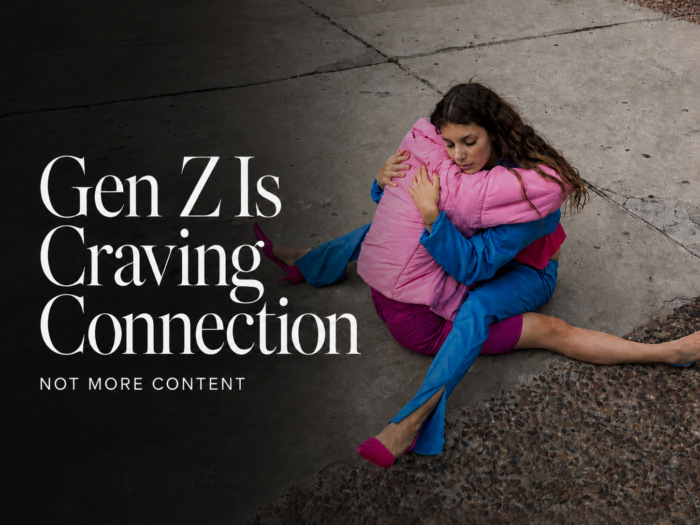
The generation who grew up with the whole internet in their pocket, are now craving a new era of unplugged presence.
Turns out the research agrees, though not for the reason you’d expect. It’s not that Gen Z are anti technology, they obviously aren’t. It’s that the algorithm got remarkably good at giving them everything, but leaving them feeling emptier than ever.
IRL or We Don’t Want It
Let’s start with the numbers, because they’re stark. Ogilvy and Ideally’s new Gen Z Pulse report surveyed 2,100 Gen Zers across the US, UK and Australia, and it’s the backbone of everything below. Separate research from Deloitte backs up the same pattern from another angle: more than 60% of Gen Zers are actively trying to cut their screen time. Not dabbling with it, but actively working at it.
Here’s the twist: this is also the generation using AI the most, daily, fluently, often creatively. And trusting it the least of any age group, sitting 14 points below Millennials. Canvas8 found 62% of Gen Zers say AI actually makes them feel less smart. So the tools keep getting better at anticipating what they need, and they keep noticing, quietly, that something’s missing anyway.
That something has a name, and it isn’t complicated. Fifty-two percent of Gen Zers say what they want more of isn’t travel, entertainment, fitness, or career progress. It’s in-person time with other people. More than any of those other categories, by a clear margin. And only 6% say they’re currently getting enough of it.
And they’re not alone in it. Research from Talker Research found 63% of Gen Z now intentionally disconnect from their devices, the highest of any generation, but Millennials are close behind at 57%, well ahead of Gen X (42%) and Boomers (29%). Eventbrite’s mid-2026 trend data backs this up from the events side: both generations are trading screen time for what it calls “unplugged presence,” block parties, potlucks, park picnics, with outdoor event bookings up 146% globally. This isn’t a Gen Z quirk. It’s a generational shift, Gen Z is just the one leading it loudest.
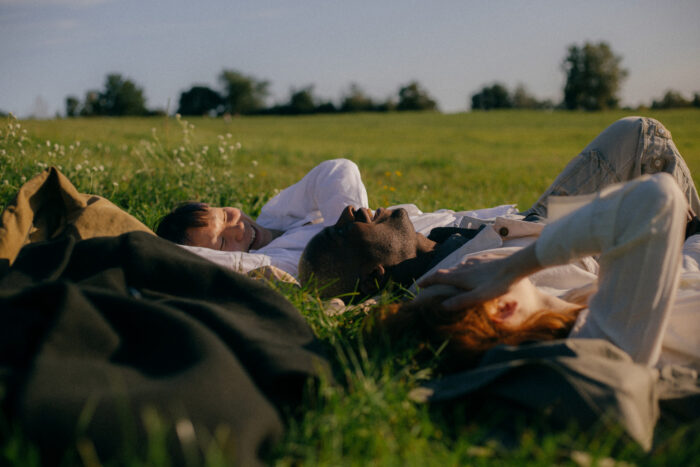
Touch Grass Is a Business Strategy
The report calls 2026 the year of “re-third-spacing.” Community classes, hobby meetups, the kind of low-key local hangout an older Gen Zer would have mocked in 2020, have quietly become lifelines. Not because they got cooler. Because everything else got emptier.
Across every market surveyed, majorities agree: digital connection helps, but it isn’t enough on its own. 63% in the UK, 58% in the US, 55% in Australia. And when Gen Z was asked what actually makes a real-world moment worth showing up for, the answer wasn’t spectacle, but connection, plain and simple, topping the list at 21%. Not the biggest show in town, the one with the realest roots.
Pop Stars Get It
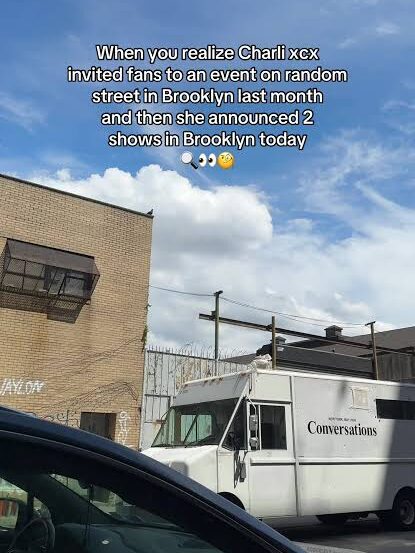
Charli XCX didn’t need a research report to tell her this. After the scale of attention that came with Brat, she’s said she ended up in the worst place mentally she’d been in her career, and pulled back from social media hard. But she didn’t just disappear. She built something instead: small, intimate “Conversations” events where she sits down with fans one-on-one, an actual conversation, not a comment thread.
Olivia Rodrigo landed on the same instinct from a different angle. She announced a one-night-only, 1,000-capacity show in Brooklyn with only hours’ notice, tickets sold exclusively at the venue box office, no app or presale, just showing up, barely announced. Compare that to the arena machine she normally runs, and the contrast is the whole point. She’s also been building physical spaces fans can walk into, a temporary pop-up gallery in LA recreating the visual world of one of her songs, rather than just posting about it.
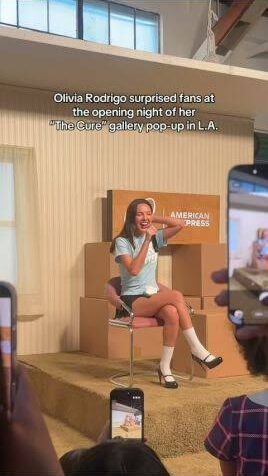

Different artists, same read on the room: when the digital version of connection runs out of road, you build somewhere people have to physically turn up. The answer isn’t more video, more content, more often.
Brands: Stop Posting. Start Building Rooms.
None of this needs a music career or a tour budget behind it. The mechanics translate directly to any brand willing to take them seriously.
Go deep, not wide. Most brands respond to a quiet feed by spreading themselves thinner, more platforms, more posts, more noise chasing the same shrinking attention. The better move is the opposite: pick fewer moments and go all the way in on them. One considered, well-built, meaningful activation beats ten scattered posts that add up to nothing memorable.
Make it scarce, not scaled. Rodrigo’s Brooklyn show worked because it wasn’t available to everyone. A limited-capacity event beats the same spend chasing maximum reach.
Give people a world to walk into, not a backdrop to pose in front of. The Cure Gallery wasn’t a product display with good lighting. It was a physical space built around a story people already knew. Any brand with a strong visual identity has the same opportunity sitting right there.
Earn the nostalgia, don’t just borrow it. Charli’s Conversations events work partly because they deliberately drop the scale people now associate with her, and go back to something that feels like how artists used to relate to fans. A nostalgic callback lands when it signals “we remember what this felt like,” not when it’s just the cheapest asset in the folder.
Treat the room as the content, not the excuse to film some. The win isn’t a better IG story from the night. It’s that the people who were actually there become the most credible advocates the brand has, and whatever gets filmed needs to carry that back onto the platforms everyone’s trying to escape.
Build for the group chat that’s about to meet IRL, not the campaign that lives only online. For a lot of young people, fandoms, interest groups and niche communities have become the main way they connect socially, and that’s not something a brand can simply bolt onto a marketing plan as an afterthought anymore. This generation is still chronically online, but they’re increasingly picky about which digital moments actually mean something. The smarter use of digital isn’t reach, it’s anticipation, coordination and a sense of belonging that pulls people toward showing up somewhere in person, meaningfully.
Support the plan, don’t run it. Gen Z is already managing enough, sleep, routines, finances, notifications. Brands shouldn’t be adding another layer of things to optimise, but reducing the overhead and creating moments of actual relief. That’s a different posture than most brand activations take, less “look at us,” more “here’s something that makes your life a bit easier, or a bit better, right now.” The strongest move is combining a real sense of usefulness with play, giving people a way to navigate life while occasionally getting to step outside its management layer altogether.
Be a co-star, not main character energy. Most brand briefs still start with “get people to…” That instinct is exactly what’s losing. The stronger posture is supporting Gen Z’s own goals and ambitions without expecting credit for it, and accepting you won’t always be the one they choose. Utility alone won’t cut it either, life already has enough tools for productivity and self-improvement. What’s actually in short supply is joy, surprise and things worth genuinely saying yes to, not just things that are efficient.
Disconnecting to Reconnect
If your 2026 marketing plan for your brand is still just “more content, more often,” a radical re-think of the strategy is in order. The real opportunity is giving people an actual reason to put the phone down, and then making sure what happens in that room is wholesome enough to be worth watching once it’s back on the screen they left behind.
By Katie Martlew, Senior Content Strategist, We Know Video