


















Most lists of the best commercial ads stop at the surface. They name the ad, describe what happens, and move on. What’s rarely addressed is the strategic decision underneath the creative – the reason an ad worked commercially, not just aesthetically.
That distinction matters if you’re responsible for briefing, commissioning, or approving video content and understanding why a piece of creative worked, and what problem it was actually designed to solve, is more useful than admiring the execution after the fact.
Each of the 23 entries below is selected because it illustrates a specific, transferable strategic principle. We’ve also woven in selected work from We Know Video’s own portfolio, which illustrates the same principle applied to a real Australian brief.
What’s Covered
- What Makes a Commercial Ad Strategically Effective
- The 23 Best Commercial Ads of All Time
- Apple: “1984”
- Nike x We Know Video: “From the Grounds Up”
- Nike: “Just Do It”
- Dollar Shave Club: “Our Blades Are F***ing Great”
- Dove: “Real Beauty”
- Volvo Trucks: “The Epic Split”
- Adobe x We Know Video: “Shortcut To” Series
- P&G: “Thank You, Mom”
- Cadbury: “Gorilla”
- Canva x We Know Video: Design School Series
- Volkswagen: “The Force”
- Always: “Like a Girl”
- Sony Bravia: “Colour Like No Other”
- Metro Trains Melbourne: “Dumb Ways to Die”
- AACo x We Know Video: Brand Film
- Chipotle: “Back to the Start”
- Honda: “Cog”
- PROMPERÚ x We Know Video: “Redefining Richness”
- Budweiser: “Whassup”
- Uber Eats x We Know Video: KFC Skydive Stunt
- Mars: M&M’s “He Exists”
- Amazon: “Alexa Loses Her Voice” (2017)
- ESPN: “This Is SportsCenter”
- What the Best Ads Have in Common
- How to Brief a Commercial Ad That Works
- Frequently Asked Questions
What Makes a Commercial Ad Strategically Effective
The selection criteria here aren’t fame or view count. It’s: what was the strategic problem this ad was designed to solve, and how did the creative solve it? Three qualities tend to separate strategically effective ads from merely memorable ones.
They’re Built Around a Specific Commercial Problem
Not “raise awareness” in the abstract, but a defined friction point: a behaviour to shift, a perception to change, a category to reframe.
The Creative Serves The Strategy
Originality is in service of the objective, not a substitute for it.
They’re Designed For Distribution
The best commercial ads anticipate how they’ll travel. They’re built for sharing and cultural conversation, not just a paid media slot.
With that framework in place, here are 23 examples of the best commercial ads of all time.
The 23 Best Commercial Ads of All Time
1. Apple: “1984”
Strategic principle: Category repositioning through a single piece of content
Directed by Ridley Scott and aired once during the Super Bowl, Apple’s “1984” didn’t mention the Macintosh’s features at all. It positioned the IBM-dominated computing industry as conformity and Apple as the act of defiance against it, making the category the villain rather than the competition.
The brief wasn’t “tell people about our new computer.” It was “make owning this computer mean something,” which is a completely different starting point, and it produced a fundamentally different result. WKV’s approach to corporate video starts with the same question: what does this need to mean to the audience?
2. Nike x We Know Video: “From the Grounds Up”
Strategic principle: Branded docu-series built around community authenticity
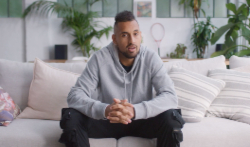
Nike’s global “From the Grounds Up” series profiles the rarely told stories of community sports figures. For the Australian instalment, Nike enlisted We Know Video to bring the story of Melbourne soccer club Fitzroy Lions SC to life, specifically the club’s founder, Abdulmalik Abdurahman and his mission to make soccer accessible for children in the community.
Shot with an intimate lens by director Madeline Kelly, the film documented the emotional reality of local sport without a scripted narrative imposed over it, producing branded content that audiences choose to watch rather than tolerate. As Elisabeth Stone from Nike USA noted, the result demonstrated what’s possible when creative expertise and authentic storytelling work together without compromise.
3. Nike: “Just Do It” (Original Launch, 1988)
Strategic principle: Building brand identity around a value, not a product
Nike’s “Just Do It” didn’t launch around a shoe: it launched around a disposition. The original 1988 campaign was built on the insight that Nike’s audience didn’t just want performance gear; they wanted permission to see themselves as athletes.
“Just Do It” expanded Nike’s addressable market from competitive athletes to anyone who aspired to physical effort, and created a creative platform flexible enough to run for decades across every sport and culture. Company story videos built around what a brand believes will consistently outlast those built around what a brand sells.
4. Dollar Shave Club: “Our Blades Are F***ing Great” (2012)
Strategic principle: Tone as differentiation in a commoditised category
Dollar Shave Club launched with a $4,500 warehouse video in which founder Michael Dubin walked the camera through his business with deadpan irreverence, explicitly mocking the incumbent category’s marketing approach.
It generated 12,000 orders in the first 48 hours and was directly credited with building the company that Unilever acquired for $1 billion four years later. In a category where every competitor ran glossy aspirational advertising, deciding to be openly funny and self-aware was itself a brand position.
5. Dove: “Real Beauty” (2004)
Strategic principle: Challenging category norms to own a new positioning
Every competitor in the personal care category was running aspirational, heavily retouched imagery. Dove’s decision to do the opposite wasn’t just a creative choice: it was a strategic land grab that made the competition’s advertising look dishonest by comparison.
The campaign ran for over two decades, which is the clearest evidence that the underlying positioning was sound. Advertising effectiveness research from the IPA consistently shows that campaigns built on genuine brand positioning outperform product-led campaigns over longer time horizons.
6. Volvo Trucks: “The Epic Split” (2013)
Strategic principle: Using spectacle to demonstrate a specific product truth
To communicate the precision of its Dynamic Steering system, Volvo asked Jean-Claude Van Damme to perform a full lateral split suspended between two reversing trucks at sunrise. The spectacle wasn’t just decoration; it was a product demonstration.
The claim that Volvo’s steering is precise enough to hold two trucks in perfect parallel while reversing was communicated entirely through the stunt, with no voiceover required. It also reached an audience far beyond Volvo’s existing customer base, generating brand awareness at a fraction of traditional media costs.
The question worth carrying into any brief: what’s the most surprising and memorable way to make the audience feel the benefit, rather than hear it stated?
7. Adobe x We Know Video: “Shortcut To” Series
Strategic principle: Product education through serialised entertainment
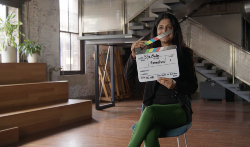
To promote Adobe Creative Cloud to a student audience, We Know Video developed a five-part scripted mockumentary series profiling five comedic characters each pursuing an unlikely path to social media fame, with Adobe tools embedded naturally into each episode. Each instalment included a functional product tutorial delivered through a character story rather than a direct demonstration, and the serialised format gave audiences a reason to return.
Joyce Neo, Adobe’s marketing manager for the student segment, noted the campaign generated positive sentiment and strong engagement across social channels. In categories where audiences resist direct product messaging, entertainment-led formats carry the story further: the same logic behind effective explainer videos for software and technology clients.
8. P&G: “Thank You Mom” (2010)
Strategic principle: Anchoring brand purpose to a universal human experience
Released ahead of the 2010 Winter Olympics, P&G’s “Thank You Mom” didn’t feature a single product. It told the story of mothers getting their children to early morning training through snow and sacrifice, because that’s what the journey to the Olympics looks like from a parent’s perspective.
The campaign became the most successful global campaign in P&G’s 175-year history at the time, generating $500 million in incremental global sales. A brand as functionally diverse as P&G couldn’t build coherent positioning around any single product attribute. Building it around a universal human value gave the entire portfolio a unified emotional platform that transcended category.
9. Cadbury: “Gorilla” (2007)
Strategic principle: Emotional association over product messaging
A man in a gorilla suit plays Phil Collins’ “In the Air Tonight” on a drum kit. No chocolate. No product shot. No tagline. The ad aired in 2007 after Cadbury had suffered a salmonella scare, and rather than address the trust issue directly, which would have amplified it, Cadbury chose to remind audiences why they liked the brand in the first place. Sales increased by 9% in the period following the campaign.
Research by Les Binet and Peter Field consistently finds that emotionally driven campaigns generate stronger long-term brand effects than rational messaging, and the Gorilla is one of the most cited examples of that principle in practice.
10. Canva x We Know Video: Design School Series
Strategic principle: Always-on episodic content as a user retention and loyalty tool
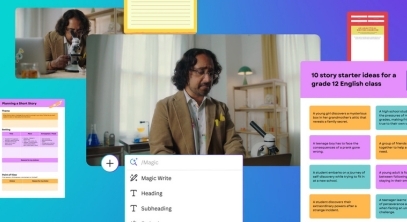
As Canva scaled rapidly, its internal team couldn’t keep pace with content demand. We Know Video is embedded into Canva’s team as a longstanding production partner, delivering a weekly episodic content model across the Design School series, Canva Creators, product launch videos, customer testimonials, and event coverage.
The results across the partnership: 100+ episodes, 300,000 monthly views, 4,959,147 impressions, and 14,885 hours of watch time. For a product where feature usage directly correlates with retention and upgrade rates, content deepening product engagement is as commercially valuable as acquisition content.
11. Volkswagen: “The Force” (2011)
Strategic principle: Earned media through pre-release digital strategy
Volkswagen’s “The Force”, a warm, funny 60-second Super Bowl spot featuring a child dressed as Darth Vader, was released online four days before the game. It accumulated 17 million views before kickoff, returning the ad’s production costs through earned media before the television placement ran. Most advertisers treated the broadcast as the primary event.
Volkswagen inverted that logic, recognising that cultural anticipation around the game created a window for earned reach that a paid placement alone couldn’t generate. Distribution strategy is as much a part of the brief as the creative.
12. Always: “Like a Girl” (2014)
Strategic principle: Reframing language to reposition a brand in its category
Always’ research revealed that the phrase “like a girl” tends to be internalised as an insult by girls around the age of puberty: exactly the moment Always enters their lives as a brand. The campaign turned that insight into a film asking people of different ages to demonstrate what it meant to run, throw, and fight “like a girl.” Older participants performed exaggerated movements; young girls ran as fast as they could.
The contrast made the point without a single line of argument, won the Grand Prix at Cannes Lions 2015, and is now widely studied as a case in insight-led creative development.
13. Sony Bravia: “Colour Like No Other” (2005)
Strategic principle: Making an abstract product claim tangible and visual
Sony needed to communicate the colour quality of the Bravia range in a category where every competitor was making the same claim. The solution: roll 250,000 coloured bouncy balls down a San Francisco hillside, capture them in slow motion across four days with 23 camera operators, and let the footage demonstrate the claim rather than state it. No voiceover was needed.
The production method itself became the story, generating press coverage before the ad aired. When a product benefit is abstract or intangible, animation and visual metaphor often achieve what a conventional product demonstration can’t.
14. Metro Trains Melbourne: “Dumb Ways to Die” (2012)
Strategic principle: Behaviour change through entertainment, not instruction
Public safety advertising has a structural problem: the audience it most needs to reach is least receptive to being told what to do. Metro Trains Melbourne’s response produced one of the most-watched public service announcements in history: over 300 million YouTube views, 127 million safety pledges, and five Grand Prix awards at Cannes Lions 2013.
The cartoonish visual style created psychological distance from the actual danger being depicted, and the song’s catchiness made the content memorable in a way a warning campaign never could be. Audiences who won’t engage with a direct message will engage with an entertaining one carrying the same content.
15. AACo x We Know Video: Brand Film
Strategic principle: Recruitment storytelling through authentic character perspective
As part of a broader rebrand, Australian Agricultural Company (AACo) needed a brand film serving as both a company positioning piece and a recruitment asset. We Know Video told AACo’s story through the perspectives of three people who work on the cattle stations: not through corporate narration or executive commentary.
The brief was explicitly anti-corporate: rich, cinematic, and emotionally honest, communicating the reality of station life rather than a glossy version of it. Recruitment content that shows rather than tells consistently outperforms content that asserts, and for organisations with genuinely distinctive cultures, the honest depiction of that reality is a more effective tool than any messaging framework.
16. Chipotle: “Back to the Start” (2011)
Strategic principle: Long-form animation as brand values proof
Chipotle’s two-minute animated film, set to Willie Nelson’s cover of Coldplay’s “The Scientist” with no dialogue, follows a farmer who industrialises his operation, watches it become something he no longer recognises, and dismantles it to return to sustainable farming. It aired during the Grammys, an unusually long format for a fast food brand, because the length was the point.
Asserting a commitment to sustainable sourcing in conventional advertising terms would have been dismissed; two minutes of visual storytelling made the same claim in a way that couldn’t easily be doubted. For brands that want to focus on their values, animation remains one of the most versatile formats available.
17. Honda: “Cog” (2003)
Strategic principle: Production craft as a signal of brand precision
Honda’s “Cog” is a two-minute ad in which components from a Honda Accord interact in an unbroken Rube Goldberg sequence, one part triggering the next until a complete car rolls into frame. It took 606 takes across three months. The ad demonstrates the Honda Accord’s features through the act of making the ad itself.
The precision required to produce a Rube Goldberg machine of that complexity mirrors the precision required to engineer a car whose parts fit together exactly. When the process of making something demonstrates the same qualities as the product, the production method becomes the marketing. AdAge named it one of the 100 best advertising campaigns of the 21st century.
18. PROMPERÚ x We Know Video: “Redefining Richness”
Strategic principle: Influencer-led content repositioning a destination for a defined audience
Despite Australia ranking as a top-five source market for visitor expenditure in Peru, Australian visitor numbers had been in decline. PROMPERÚ enlisted We Know Video, in collaboration with creative partner Example, to develop a content strategy targeted at Australian travellers, built around the idea that Peru offers a form of richness: cultural, culinary, natural, and experiential: unavailable in conventional luxury travel.
The campaign featured a hero brand film and targeted cut-downs anchored by Australian influencers, including Nathalie Kelley, Andy Allen, Quin Schrock, and Jackson Groves, producing 2.7 million+ audience reach, 1.3 million+ engagements, and 700+ new assets.
19. Budweiser: “Whassup” (1999)
Strategic principle: Cultural language as a campaign multiplier
“Whassup” began as a short film by Charles Stone III. Budweiser licensed it, aired it during Monday Night Football, and within weeks the phrase had entered mainstream cultural usage: referenced on television programmes, in workplaces, and across sports events, functioning as shared language rather than an advertising message.
A phrase people use independently, without any advertising prompt, is worth considerably more than a slogan that only appears in paid media. The campaign won the Grand Prix at Cannes Lions 2000 and remains a reference point in discussions of word-of-mouth marketing mechanics.
20. Uber Eats x We Know Video: KFC Skydive Stunt
Strategic principle: Stunt-led earned media to amplify a brand partnership announcement
When KFC joined Uber Eats, We Know Video produced a stunt proportionate to the news: a human-sized KFC drumstick skydiving from the stratosphere at 200 kilometres per hour into a six-metre-tall Uber Eats bag. The premise was inherently visual, understandable in a single image or a three-second clip, and directly specific to the partnership’s logic: a KFC product arriving in an Uber Eats bag is the exact mechanic being announced.
It generated a hero film, social cut-downs, and behind-the-scenes content from a single production event. Earned media isn’t accidental: it results from designing creative that has a reason to be shared independent of paid placement.
21. Mars: M&M’s “He Exists” (1996)
Strategic principle: Longevity through a consistent character and repeatable premise
The M&M’s “He Exists” ad, in which the Red M&M faints upon meeting Santa Claus, is 15 seconds long and has aired annually for nearly three decades. Mars found a premise simple enough to be understood immediately and flexible enough to sustain variations across years. Most marketing teams replace campaigns before the audience has fully absorbed them. The M&M’s example is a practical illustration of what patience looks like in an advertising context.
22. Amazon: “Alexa Loses Her Voice” (2017)
Strategic principle: Product demonstration disguised as celebrity-led entertainment
Amazon’s Super Bowl ad presented a scenario in which Alexa loses her voice and celebrity replacements: Gordon Ramsay, Cardi B, Anthony Hopkins, and Jeff Bezos, attempt to fill in. Every question the celebrities answered badly was a question Alexa answers correctly in real life. It was product education structured as comedy, delivered at scale during the most-watched television event of the year.
In categories where product functionality needs to be communicated, embedding the demonstration inside an entertaining premise gives audiences a reason to engage with use cases without feeling like they’re watching a tutorial. WKV applies the same logic when developing an explainer video for SaaS and technology clients.
23. ESPN: “This Is SportsCenter” (1995–ongoing)
Strategic principle: Institutional humour as long-term brand positioning
Running in various forms since 1995, “This Is SportsCenter” places professional athletes inside the mundane, bureaucratic environment of the SportsCenter offices: Michael Jordan competing with an intern for parking, Tiger Woods practising chip shots in a corridor. The strategic value isn’t any individual execution; it’s the cumulative brand asset built over three decades of consistent creative. The premise is infinitely extensible and positions SportsCenter as a place athletes want to be associated with, reinforcing the brand’s authority as the home of sports media.
Research consistently finds that sustained investment in a single creative platform generates stronger brand equity effects than repeated campaign refreshes.
What the Best Ads Have in Common
Looking across these 23 examples, a few patterns emerge.
Specific Objective
Not “raise awareness” in the abstract: a defined problem, a defined audience, a defined moment in that audience’s relationship with the brand or category. Specificity of the objective is what separates briefs that produce memorable work from briefs that produce competent work.
Visible Creative Logic
You can trace a direct line from the strategic problem to the creative solution in every entry on this list. “The Epic Split” isn’t spectacular for its own sake: it’s the most efficient possible demonstration of a specific product claim. When the creative logic is sound, the execution follows.
Distribution Was Considered
“The Force” was designed to generate earned media before the paid placement aired. “Whassup” was designed to enter cultural usage independent of advertising. The best commercial ads aren’t made and then distributed: distribution strategy is built into the brief.
Audience Tension
Dove’s “Real Beauty” worked because it identified a specific tension in its audience’s experience and positioned the brand at the resolution of that tension. The brand aspiration follows from the audience insight, not the other way around. We explore this thinking in more depth in Why Most B2B Video Fails to Drive Revenue.
How to Brief a Commercial Ad That Works
The most common reason commercial ads underperform is usually because of the brief. A brief that describes the desired output produces an output-focused creative. Whereas a brief that describes the strategic problem produces something worth watching.
Before commissioning your next commercial ad, ask: where does audience behaviour or perception currently sit, and where does it need to move? What does your target audience believe or experience that makes this problem exist? What does success look like in measurable terms, beyond views? What format constraints does the distribution channel impose on the creative?
Once the strategic problem, audience tension, and distribution strategy are defined, give the production team genuine latitude to solve it. The briefs that produced the work on this list were specific about the objective and open about the method.
If that distinction matters to your next brief, we’d welcome the conversation. We Know Video works with corporate and enterprise clients across Sydney and Melbourne to develop video strategy before a single frame is shot. Request a quote or book a free strategy call with our team today.
Frequently Asked Questions
Several ads compete for this distinction depending on the criteria. Apple’s “1984” is widely regarded as the most culturally significant single commercial ever produced. Metro Trains Melbourne’s “Dumb Ways to Die” holds the record for the most-shared public service announcement in history. P&G’s “Thank You Mama” is among the most commercially successful, generating $500 million in incremental global sales. The answer depends on whether you’re measuring cultural impact, earned reach, or commercial return.
Memorability and effectiveness are related but distinct. An ad can be memorable without changing behaviour or commercial outcomes. Effective commercial ads move a specific audience from one position to another, whether that’s a perception shift, a behaviour change, an increase in brand preference, or a reduction in purchase friction. The clearest sign of effectiveness is measurable change in a metric that matters commercially, not views or impressions alone.
Length should follow the content’s requirements and the distribution channel’s constraints, not a universal rule. Honda’s “Cog” and Chipotle’s “Back to the Start” both run at two minutes and justify every second. M&M’s “He Exists” makes its point in 15 seconds and has run for nearly three decades. For social video, the first three seconds determine whether the next 27 are watched. Format and distribution context should inform length decisions before creative development begins.
A commercial ad typically has a defined media placement, a specific call to action, and a clear brand message within a constrained format. Branded content is content the audience seeks out or shares because it has intrinsic value beyond the brand message. The practical difference is in the audience relationship: commercial ads interrupt, branded content attracts. Both have legitimate strategic roles, and the choice between them should follow from the audience’s relationship with the brand and the specific commercial objective.
Virality isn’t random, but it isn’t reliably engineered either. The ads on this list that generated exceptional earned reach share a few structural characteristics: they gave audiences something to feel strongly about, they were built around a premise summarisable in a single sentence, and they were relevant to a cultural conversation already underway. Virality tends to follow content that meets a latent audience need at a culturally resonant moment.
Production budgets vary enormously depending on format, scale, and distribution channel. Dollar Shave Club’s launch video was produced for approximately $4,500 and generated a billion-dollar outcome. The relevant question isn’t “what does a good commercial ad cost?” but “what level of investment is justified by the commercial objective?”
No. Cadbury’s Gorilla, P&G’s “Thank You Mama,” Apple’s “1984,” and Always’s “Like a Girl” each build their commercial impact through brand positioning rather than product demonstration. The decision about product prominence should follow from the objective. If the goal is brand positioning or reaching new audiences, leading with the product can reduce effectiveness by limiting the emotional entry point.
A good commercial ad starts with a clearly defined strategic problem, not a creative idea. The best ads on this list – across every category, era, and budget – share one characteristic: the creative decision is traceable back to a specific audience tension or commercial objective. Production quality matters, but it’s downstream of strategic clarity. Brief the problem well, and the creative has somewhere to go.